
Marion County Transition Overview
The Marion County Transition Center is a distinct Marion County Sheriff's Office facility beside the jail campus. It was formerly known as the Marion County Work Release Center. The official page describes it as a minimum-security, around-the-clock operation and an intermediate sanction between jail and probation. It holds work-release transfers from jail, court-sentenced offenders, and probation or parole violators who can be managed there instead of being placed in the jail or sent to state prison.
Residents are expected to work either at their own jobs or through community service. When applicable, they must pay court-ordered fines, restitution, supervision fees, and family or child support. The center can impose in-house sanctions, including pass removal, room restriction, and work-crew assignment. External sanctions can include court return, program termination, jail commitment, or state-prison commitment. Those details make the Transition Center a custody setting, but not the same kind of custody as a street-arrest booking at Marion County Jail.
The official Transition Center page shows the work-release and sanction role in county custody.
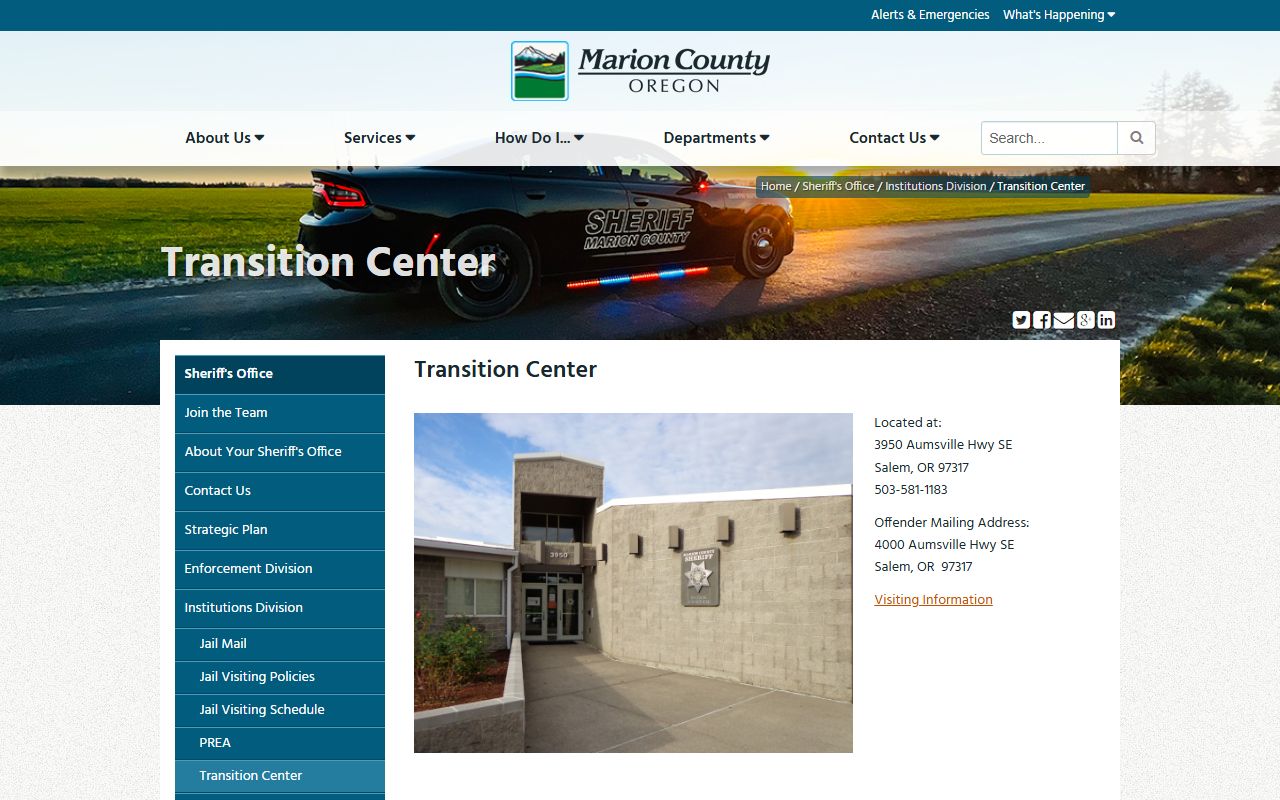
The page is the best source for the center's address, phone, capacity, resident expectations, and DeMuniz Resource Center connection.
Transition Center Capacity
Marion County lists the Transition Center capacity as 144 offenders. Historical county budget material also used a 144 work-release budgeted capacity figure, which matches the current official Transition Center page inspected in June 2026. Unlike the main jail's mixed booking population, this capacity is tied to a minimum-security work-release and sanction model. It is a relief valve for the jail population because some residents can be managed in a structured setting while working, paying obligations, or completing community service.
No official daily public dashboard was located for the Transition Center's current head count. That means the sourced number for the facility page is capacity, not a live population count. Use the roster, phone line, or facility contact for a specific resident instead of estimating occupancy from the 144-offender capacity.
Search Transition Center Custody
For the Marion County Transition Center, start with the same county custody channels used for jail records: the Marion County Web Jail Viewer, the RPS current-inmate roster, and the jail information line when online results are unclear. The most important local rule is from Jail Viewer: if the location is blank, Marion County says that means the adult in custody is housed in the Transition Center. Do not assume a blank location means no location or a missing record.
The center's residents may be work-release participants, court-sentenced offenders, or probation and parole violators. If a person has been sentenced to Oregon Department of Corrections and transferred to prison, the county roster is no longer the right lookup tool. Use Oregon Offender Search for sentenced state-prison custody.
- Search Jail Viewer by last name, first name, or booking-date range if the person is still in Marion County custody.
- Check the RPS roster tabs for current inmates, new inmates, or recent releases.
- Look closely at the location field. A blank location can mean the Transition Center.
- Call the jail information line or Transition Center if work-release status, pass status, or custody location is unclear.
| Status Clue | Where to Check |
|---|---|
| Blank Jail Viewer location | Transition Center per Marion County notice |
| Current county custody | Jail Viewer or RPS roster |
| Release or transfer notification | Oregon VISOR |
| Sentenced prison custody | Oregon Offender Search |
Marion County Transition Contact
The Transition Center has its own street address and phone number, while the offender mailing address is listed at the jail address. Use the center phone for facility-specific questions about visiting, resident status, and program rules. Use the broader Marion County Jail information line or Criminal Records Unit when the question is about roster accuracy, booking records, or public-records requests.
Marion County Transition Center
3950 Aumsville Hwy SE
Salem, OR 97317
503-581-1183
Minimum-security work-release and intermediate-sanction facility
Offender Mailing Address
4000 Aumsville Hwy SE
Salem, OR 97317
503-588-8595
Use jail information line when roster status is unclear
Transition Center Visits
Transition Center visiting rules differ from the jail schedule. Visits are held on weekends by dorm, and visitors must arrive early. The official page says doors open about 10 minutes before the session and lock 10 minutes after the start. Visitors must be 18 unless they are a legal spouse. Up to three visitors may attend at once, with no more than two adults.
Several rules are specific to this minimum-security setting. Orange clothing is prohibited. Food and drink are not allowed in the lobby. Pets are not allowed. Personal property drops are allowed only during an approved visit, except for separate medication and hygiene rules. Firearms, ammunition, alcohol, narcotics, and dangerous drugs are prohibited on grounds, including in vehicles.
| Day | Dorm | Hours |
|---|---|---|
| Saturday | A Dorm | 11:30 a.m.-12:30 p.m. |
| Saturday | B Dorm | 2:30 p.m.-3:30 p.m. |
| Sunday | C Dorm | 9:30 a.m.-10:30 p.m. as published |
| Sunday | D Dorm | 2:30 p.m.-3:30 p.m. |
The official Transition Center visiting page shows the dorm schedule and entry rules.
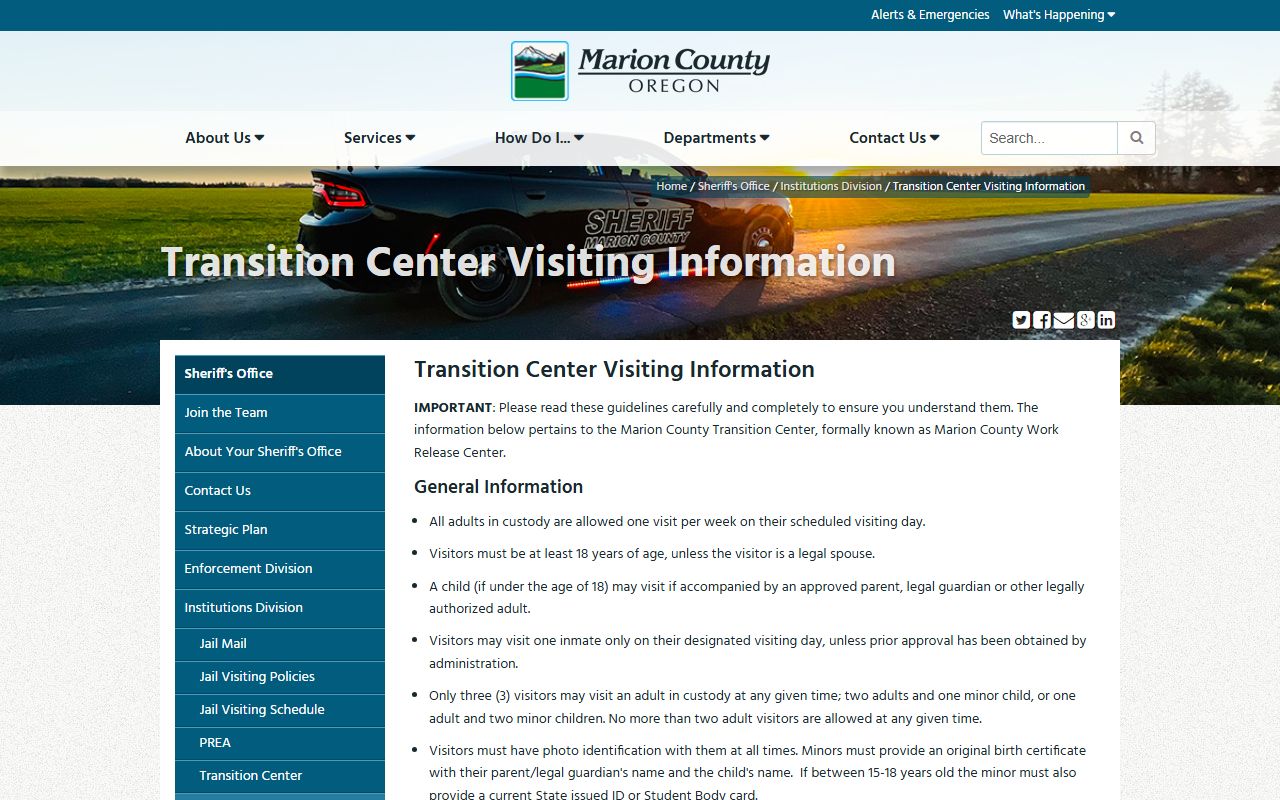
The published C Dorm time appears unusual, so confirm the schedule before planning a Sunday visit.
Transition Center Mail
The Transition Center page lists the offender mailing address as the main jail address at 4000 Aumsville Hwy SE in Salem. That is different from the center's physical address at 3950 Aumsville Hwy SE. Keep the two separate when writing, visiting, or using a map. The research did not locate a separate public commissary fee schedule for Transition Center residents, so fee claims should not be added beyond what the official page says about financial obligations and resident duties.
The money-related facts that are documented are tied to work release and sanctions. Residents are expected to work when allowed and pay court-ordered fines, restitution, supervision fees, and family or child support when applicable. Those obligations are not the same thing as jail commissary deposits. For video, phone, or package rules that overlap with jail services, confirm directly with the center before relying on jail-only instructions.
| Service | Provider / Detail |
|---|---|
| Resident Mail | 4000 Aumsville Hwy SE, Salem, OR 97317 |
| Financial Duties | Court fines, restitution, supervision fees, and family or child support when applicable |
| Facility Phone | 503-581-1183 for Transition Center questions |
Transition Center Intake
Transition Center intake is not the same as new arrest booking. Residents often arrive through work-release transfer, court sentence, probation or parole violation response, or another structured sanction. A resident may have moved from Marion County Jail to the center as a population-management step. Another may be placed there because the court or supervision authority is using the center as an alternative to more restrictive custody.
Sanctions can happen inside or outside the center. In-house sanctions include pass removal or denial, room restriction, and work-crew assignment. External sanctions include return to court, program termination, and commitment to jail or state prison. That is why a roster result can change without a new street arrest. The person's status may be driven by program compliance, court action, or probation and parole decisions.
- Work release
- A custody program that allows approved work outside the facility under rules and supervision.
- Intermediate sanction
- A structured custody response between ordinary supervision and jail or prison commitment.
- Population relief valve
- Marion County's description of the center's role in easing jail population pressure.
About Marion County Transition
The Transition Center sits in the same Aumsville Highway corridor as the main jail, Santiam Correctional Institution, and the Criminal Court Annex. That geography causes confusion because a person can be near the same road while being in county jail, work release, state prison, or court. The center also houses the DeMuniz Resource Center, which provides information and services for formerly incarcerated people rebuilding lives in the community.
Marion County's broader reentry work includes the Marion County Reentry Initiative, a collaboration among community corrections, education, law enforcement, health, and nonprofit agencies. The initiative focuses on housing, transportation, treatment, mentoring, family strengthening, and employment. Those services do not make the Transition Center a prison. They help explain why the facility is part custody site, part supervision tool, and part reentry corridor.
Note: Confirm dorm, visit time, and resident status with the Transition Center before traveling to the Salem campus.